How to work with your thesis supervisor and get useful feedback

Contents5
- Your relationship with your thesis supervisor is a partnership. For it to work, you need to set clear expectations for communication, meeting frequency, and feedback right from the start.
- Your main job is to drive the project forward. Show progress with concrete outputs, not just talk. A simple weekly email update is a great way to keep your supervisor informed.
- When you get feedback, focus on big-picture issues like argument and structure first. Give yourself time to process the comments before you start revising.
- A study of 320 medical students shows most expect shared project responsibility, which confirms that supervisors are guides, not managers. You are the project manager of your thesis.
How do you build a good relationship with your thesis supervisor?
The best way to start is by openly discussing mutual expectations in your very first meeting. A framework from Kallenberg and colleagues suggests covering personal, procedural, and academic expectations to build a shared understanding from day one. This simple step prevents major misunderstandings down the road.
A good supervisory relationship often changes over time. Following Anderson's model, a supervisor might take a more direct, hands-on role at the beginning of your project. They help you define the scope and get started. As you grow more confident and knowledgeable, their role shifts to become more advisory, responding to your specific questions. This isn't a sign of them disengaging; it's a sign of your growing independence as a researcher.
What should you expect from them? A study on student expectations shows that most students look to their supervisors for guidance on research topics, help accessing resources like labs, and support during the writing process. They aren't there to do the work for you, but to provide the high-level direction and resources you need to succeed. The relationship is a partnership. They bring experience and oversight; you bring the drive and the daily work that moves the project forward.
Your first meeting is your best chance to set the tone. Discuss how often you'll meet, the best way to communicate between meetings (email, Slack), and what a typical turnaround time for feedback on a draft looks like.
How can you get and manage useful feedback?
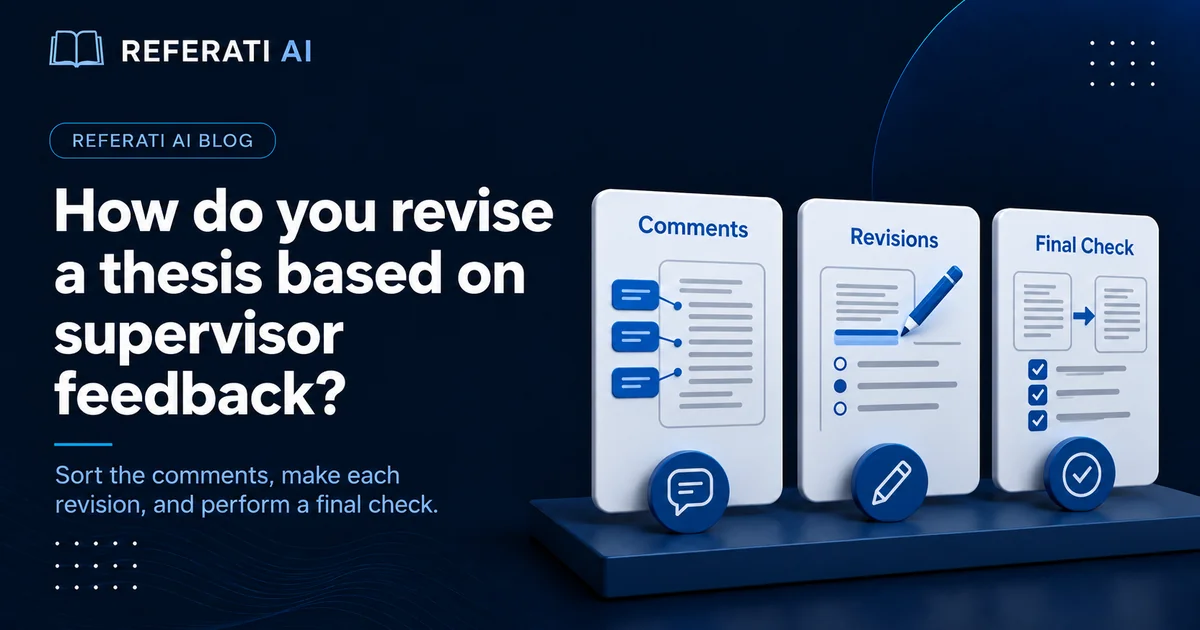
Receiving feedback well is a skill. The most effective strategies involve giving yourself time to process comments, asking clarifying questions about anything you don't understand, and then grouping the feedback by theme before deciding on your next steps. Don't feel you have to tackle everything at once.
Not all feedback is created equal. Research shows that students produce much better second drafts when the feedback focuses on higher-level issues like the overall structure, the strength of the argument, or the flow of logic. Feedback that gets stuck on lower-level issues like grammar or spelling is far less helpful, especially in early drafts. You want your supervisor focused on the big picture. They are your first critical reader for your ideas, not your copyeditor.
It's completely normal to feel a bit disappointed or overwhelmed by a lot of feedback. The key is not to take it personally. Give yourself a day to sit with the comments before you start making changes. Then, read through everything and prioritize. What are the most critical changes needed to improve the chapter? Start there. You can create a simple action plan, tackling the most important points first and saving smaller tweaks for later. This makes the revision process feel much more manageable.
Remember, feedback is about your work, not about you. It’s a tool for improvement and a normal part of the academic process, not a personal critique of your abilities.
If you find yourself struggling to organize your thoughts before sending a draft, sometimes getting a different perspective helps. You can use tools to polish your writing first. An AI built for academic writing, like referati.ai, can help you check your structure and clarity, letting your supervisor focus on your core ideas.
What's your role and responsibility in the supervision process?
Your primary role is to drive your research forward. Supervisors appreciate a "show, don't tell" approach. Instead of just saying you're making progress, demonstrate it with tangible work. This active stance shows initiative and makes your meetings much more productive for both of you. You are the project manager of your thesis.
To make this concrete, try sending a brief agenda before each scheduled meeting and a short summary of action points afterward. One of the most effective communication tools is a simple weekly update email, sent every Friday. Dr. Faheem Ullah suggests a one-paragraph summary with three sentences on what you accomplished that week, three sentences on your plans for the next week, and one sentence on any obstacles you're facing. This keeps your supervisor in the loop with minimal effort.
When you do need help, be specific. Researcher De Kleyn identified three common types of feedback-seeking questions students ask:
- Problem-based: "I'm stuck on this analysis. What should I do?"
- Next-step: "I've finished this section. Is it good enough to move on?"
- Iterative: "I've made the changes you suggested. Is this better now?"
Knowing what kind of help you need makes it easier for your supervisor to give you a useful answer. Don't be afraid to ask directly.
Instead of telling your supervisor, "I read five articles," show them. Send a one-page document with a brief critical summary of each article and a bulleted list of the key points you believe are most relevant to your research. This shows engagement, not just activity.
What are common challenges and how can you overcome them?
Even in the best relationships, challenges can arise. A 2012 study at Tehran University identified four main categories of challenges in thesis supervision: the supervisor's knowledge, the department's atmosphere, institutional rules, and the monitoring process. Recognizing where a problem comes from is the first step to solving it.
PhD projects are long-term endeavors, often spanning several years. You'll meet with your supervisor at many different stages, but the expectation is that you can and will work independently between those meetings. Your supervisor is a guide, not a micromanager. If you feel lost or unmotivated, it's your responsibility to re-engage and seek guidance.
So what happens when things go seriously wrong? If there's a fundamental mismatch in working styles, expertise, or personality, you may be able to request a change of supervisor. Most universities have a formal process for this, but it requires a well-documented and valid reason. This should always be a last resort, after you've made a genuine effort to resolve the issues through direct communication, perhaps with the help of a graduate program coordinator.
| Your Role (Student) | Supervisor's Role |
|---|---|
| Drive the project forward and manage your time | Provide guidance on research direction and scope |
| Schedule meetings and send agendas | Offer timely, constructive feedback on drafts |
| Work independently between meetings | Help you navigate departmental and university rules |
| Ask specific, targeted questions when you're stuck | Ensure you have access to necessary resources |
The most successful supervisory relationships are partnerships built on mutual respect and clear communication. Understanding your responsibilities, as laid out in resources from institutions like the University of Helsinki, is just as important as knowing what to expect from your supervisor.
Frequently Asked Questions
How do I start my relationship with my PhD supervisor?
Begin with a meeting to discuss mutual expectations. Talk about communication styles, meeting frequency, and turnaround times for feedback. As suggested by guidance from the University of Amsterdam, covering personal, procedural, and academic expectations early on helps build a strong foundation and prevents future misunderstandings.
How can I effectively update my supervisor on my progress?
Use the "show, don't tell" method. Instead of just listing tasks, provide concrete outputs like draft paragraphs or data summaries. A great tool is a short, weekly email update with three sentences on what you did, three on what's next, and one on any roadblocks.
What should I do if the feedback from my supervisor is difficult or disappointing?
First, don't take it personally. Give yourself a day to process the comments before reacting. Then, read through everything and ask for clarification on points that are unclear. Group the feedback by themes (e.g., argument, structure, evidence) and prioritize the most important changes.
What can I expect from my supervisor?
You can expect your supervisor to provide high-level guidance on your research topic, help you access necessary resources, offer constructive feedback on your work, and help you navigate the academic requirements of your degree. They are your mentor and guide through the research process.
What does my supervisor expect from me?
Your supervisor expects you to take ownership of your project, work independently, manage your time effectively, and be proactive in your communication. They expect you to come to meetings prepared and to ask specific, thoughtful questions when you need help or guidance.
Can I change my thesis supervisor?
Yes, most universities allow students to change supervisors if there is a valid and well-documented reason, such as an irreparable breakdown in communication or a mismatch in expertise. This is usually a last resort after attempts to resolve the issues have failed.
Still wrestling with that draft? Writing is a huge part of the process, and getting it right before it even reaches your supervisor can save you both a lot of time. Try referati.ai: an AI built for academic writing.