You cannot find sources on your topic: what to do
Contents5
If you can't find sources for your research paper or article, the problem is likely your strategy, not your topic. Before giving up, try adjusting your approach. Broaden your search (for example, from a specific town to the entire state) or narrow your focus to a single aspect of the topic. For any sources you do find, use a framework like the CRAAP test to check their credibility. Remember that proper research takes time; professional writers often spend at least an hour gathering information for a single 800-word article.
How should I pick a research topic when sources are hard to find?
When sources seem scarce, start with a topic you're genuinely curious about, but be prepared to stay flexible. Your initial idea might be too broad or too narrow to work. Be ready to adjust your scope as you do some preliminary searches. If you can't find information on your small town, for example, broaden the search to your state or country.
Finding the right scope for your topic is a balancing act. If your idea is too broad—like "the history of music"—you'll be buried in information, making it impossible to find a clear focus. If it's too narrow, you might not find any sources at all. This is why flexibility is key.
Let's say your initial topic is "the impact of organic food labeling in my specific small town." You search and find nothing. Don't panic. You can broaden your strategy by looking for information on organic food labeling in your state or across the United States. This wider net is much more likely to catch relevant studies, articles, and data.
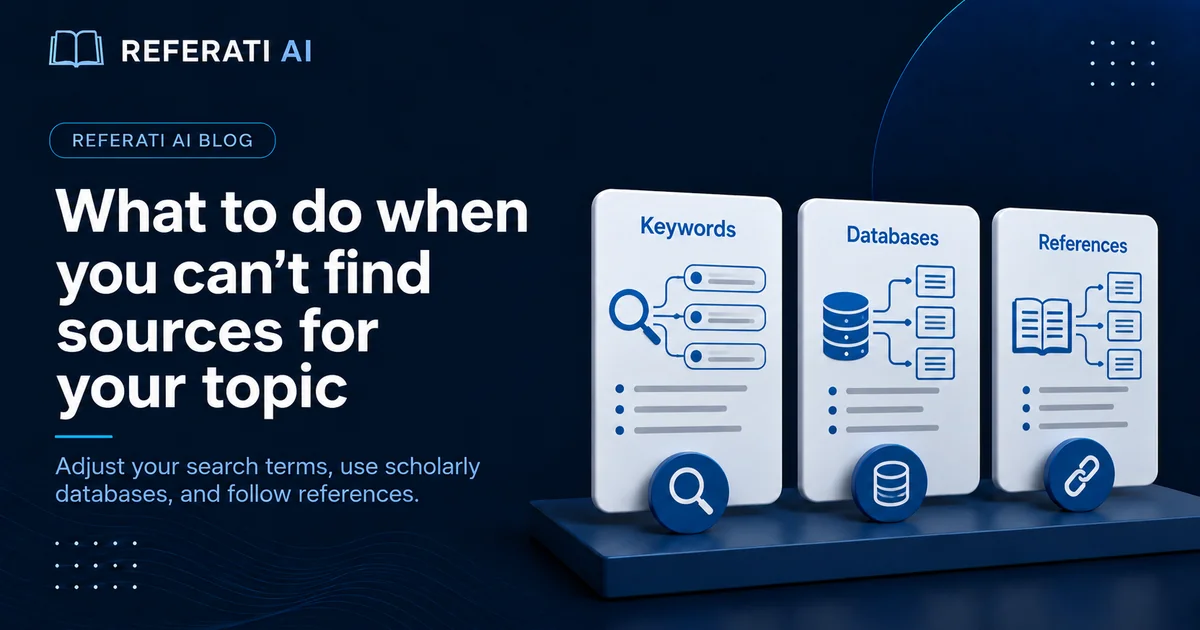
If your topic is "polar bears," you'll get general results. But if you can't find specific sources for your angle, try searching for related concepts. Think about what a polar bear is connected to: ice, cubs, pollution, hunting, diet, or their status as an environmental icon. Each of these keywords opens up a new avenue for research.
This preliminary work is not a waste of time. It's an essential part of the research process. It helps you confirm that your topic is workable and saves you from hitting a dead end hours or days into your writing.
How can I find credible sources for a niche topic?
For unfamiliar topics, start with highly credible sources like encyclopedias, textbooks, or academic journals. For faster online work, look for websites with .edu or .org domains. Professional writers often spend at least an hour on research for an 800-word article, according to an analysis by Podroom Creative, so plan accordingly.
Let's be honest. Sometimes you have to write about a topic you know nothing about. Imagine being assigned an article on "haploid gametes." Where do you even begin? The trick is to keep reading until you understand the concept well enough to explain it to a child. Start with a broad overview from a reliable source like an encyclopedia, then gradually move to more specific articles. You're building a foundation.
This is what content writers do all the time. That one-hour research average is for a standard blog post, before a single sentence gets written. If you feel like you're spending a lot of time just reading and learning, you're not alone. It's a necessary part of producing quality work.
As you research, take notes. This might seem obvious, but actively writing down key points forces you to concentrate. It helps you process the information instead of just passively scanning it, making it easier to remember and connect ideas later on.
How do I check the quality of the information I find?
You can use the CRAAP test to check the quality of your sources. Developed by California State University, this framework helps you ask the right questions about a source's Currency, Relevance, Authority, Accuracy, and Purpose. It's a simple, systematic way to evaluate reliability and avoid weak information.
A huge amount of online content exists for marketing purposes. This means its main goal might be to sell a product, not to provide neutral, factual information. This doesn't automatically make it useless, but you have to read it with a critical eye. Always ask: why was this written? Who is paying for it?
Here’s a simple way to think about source quality:
| Weak Source (Potential Red Flags) | Strong Source (Green Flags) |
|---|---|
| No author is listed or the author has no credentials. | The author is a recognized expert in the field. |
| The information is outdated or there's no publication date. | The information is current and the date is clearly visible. |
| The tone is heavily biased or reads like an advertisement. | The tone is objective and presents evidence. |
| There are no citations or links to other sources. | The author cites their sources clearly. |
| The website is trying to sell you something directly. | The website is from a university (.edu) or respected organization (.org). |
By applying the CRAAP framework, you can move beyond a gut feeling and make an informed judgment about whether a source is solid enough to use. It's a skill that becomes more important every day.
It's a common mistake to assume all online articles are equally well-researched. Many are not. Some writers are more ethical and diligent than others. Always be skeptical and check for the signs of a trustworthy source.
What should I do if my research hits a dead end?
Hitting a research dead end usually means you need to adjust your approach, not abandon the project. Research isn't a straight line. Be prepared to refine or even completely change your topic based on what you find. This flexibility is what separates a frustrating roadblock from a solvable puzzle.
This is where curiosity becomes your most powerful tool. If you're genuinely interested in your subject, a dead end can feel like a puzzle to solve. It can inspire you to look at the problem from a different angle or find a creative workaround. Being open to change is crucial.
Don't be afraid to ask for help. A professor, a company librarian, or even a different set of Google searches can provide new ideas. Explaining your topic and where you're stuck to someone else can often spark a solution. They might suggest new keywords, alternative databases, or a different way to frame your question. The idea that a topic is fixed from the start is a myth. According to a guide from the University of Northwestern - St. Paul, good research is an iterative journey. You start with an idea, gather information, and refine your idea based on what you find.
Frequently Asked Questions
What do I do if I don't have enough sources for my research?
Try broadening or narrowing your topic. If your topic is too specific, expand your search scope (e.g., from one city to the whole country). If it's too broad, focus on a particular aspect or time period. Also, try different keywords and search terms related to your subject.
How can I check if an online source is credible?
Use the CRAAP test: check its Currency (is it recent?), Relevance (does it fit your needs?), Authority (who wrote it?), Accuracy (is it fact-based?), and Purpose (why was it created?). Look for sources from educational (.edu) or organizational (.org) websites and be wary of purely commercial content.
What are good starting sources for an unfamiliar topic?
Start with broad, foundational sources like encyclopedias, textbooks, and overview articles. A site like Wikipedia can be useful for getting a general sense of a topic and finding initial keywords, but you should always move on to more authoritative sources for your actual research.
How much time should I spend on research?
It varies, but don't underestimate it. For a standard 800-word article, content writers often spend at least an hour just on research. For academic papers or in-depth reports, the time required will be much greater. It's a core part of the writing process, not just a preliminary step.
How do I start researching a topic I know nothing about?
Start with basic, easy-to-understand overviews. Your goal is to learn enough to be able to explain the topic simply. Keep reading from multiple sources, gradually moving from general introductions to more detailed articles, until the core concepts are clear in your mind.
Should I change my research topic if I can't find sources?
Yes, you should be open to it. Research is a flexible process. If you've tried different search strategies and still come up empty, it's often more efficient to refine, pivot, or choose a new topic that has more available information than to force one that is unsupported.
What role does curiosity play in research?
Curiosity is your engine. It keeps you motivated when you hit a dead end and inspires you to ask new questions and explore different angles. A genuine interest in your topic makes the research process feel less like a chore and more like an investigation.
If you're tackling complex academic writing and hit a wall with sources or structure, modern tools can help. An AI designed specifically for research writing, like referati.ai, might be what you need to get unstuck.