Research ethics and informed consent explained
Contents5
Informed consent is the process where a person voluntarily agrees to join a study after being told everything important about it. Its modern form was shaped by historical ethical failures, like the 1947 Nuremberg Code created after Nazi experiments and the US National Research Act of 1974, which followed the Tuskegee Syphilis Study. In that study, nearly 400 men were deceived and denied treatment for decades. Today, consent is a mandatory, ongoing conversation that respects a participant's right to understand the risks and benefits and to leave a study at any time.
What is informed consent and what are its key elements?
Informed consent is a process where a person freely agrees to participate in a study after they have been given all the necessary information to make a decision. It is a critical safeguard for anyone taking part in research, ensuring they are treated as partners, not just subjects. It's a non-negotiable part of ethical science.
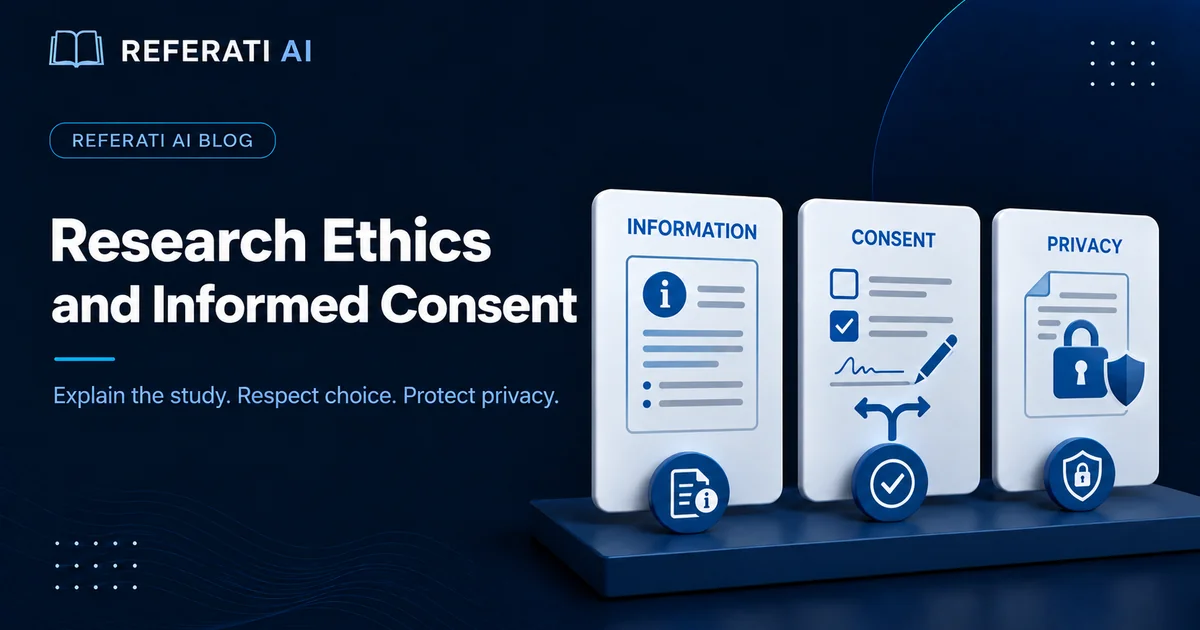
This concept is built on three main pillars: information, comprehension, and voluntariness. First, you must receive enough information to make a real choice. This includes the study’s purpose, what you'll have to do, the potential risks and benefits, and any other options available. Second, this information has to be presented in a way you can actually understand, without confusing jargon. You should have every chance to ask questions.
Finally, your decision must be completely voluntary. You can't be pressured, rushed, or offered rewards so large they might cloud your judgment. The Nuremberg Code, established in 1947, made this clear: "The voluntary consent of the human subject is absolutely essential." This principle applies to all research involving people, whether they are patients, healthy volunteers, or part of a vulnerable group, and covers the use of personal data and biological samples.
Before you go to a consent meeting, write down any questions you have. Don't be afraid to ask about anything that worries you, from minor side effects to how your data will be kept private. No question is too small.
How did the idea of informed consent develop over time?
The modern rules for informed consent were forged in response to horrific ethical failures in the 20th century. While the legal right of an adult to control their own body has been recognized since at least 1914, applying this strictly to research took several major tragedies to become standard practice.
The most shocking events were the medical experiments conducted by Nazi doctors on concentration camp prisoners. These atrocities led directly to the Nuremberg Code in 1947, which stated for the first time that voluntary, informed consent is a non-negotiable requirement for any ethical research. This was later reinforced by the World Medical Association's Declaration of Helsinki in 1964, which remains a key document for medical ethics worldwide.
But these failures weren't limited to wartime Germany. In the United States, the Tuskegee Syphilis Study ran for 40 years, from 1932 until it was exposed in 1972.
In the Tuskegee study, the U.S. Public Health Service tracked nearly 400 African American men with syphilis, telling them they were receiving treatment for "bad blood." They were never given effective medicine, even after penicillin became the standard cure in the 1940s, because the researchers wanted to observe the untreated disease.
The public outcry from this revelation prompted the US Congress to pass the National Research Act of 1974. This act created federal rules to protect human subjects and established the system of Institutional Review Boards (IRBs) to oversee research. In 1997, President Bill Clinton formally apologized, stating, "What was done cannot be undone, but we can end the silence... The United States government did something that was wrong, deeply, profoundly, morally wrong."
Why is consent a process, not just a document?
Thinking of informed consent as just a form you sign is a common but serious misunderstanding. That signature is only one small part of a much larger conversation. Real informed consent is an ongoing dialogue between the researcher and you, the participant, that begins before the study and continues until it ends.
The main goal is to empower you to make an educated choice, not just to get your signature on a page. This means you should understand the study's purpose, what you'll be asked to do, the potential risks and benefits, and what other options you have. It's a conversation. The researcher explains, and you ask questions until you feel you have the full picture.
This "process" approach also means you can change your mind. Signing the form doesn't lock you in. If new information comes up that could change your decision to participate, the research team must tell you. You have the right to withdraw your consent and leave the study at any time, for any reason, without facing any penalty.
| Just a Form (The Misconception) | A Process (The Reality) |
|---|---|
| A one-time event at the start | An ongoing conversation |
| Focuses on getting a signature | Focuses on participant understanding |
| Seen as a legal hurdle | Seen as an ethical duty |
| Participant may feel unable to ask questions | Questions are encouraged and expected |
| Consent is seen as permanent | Consent can be withdrawn at any time |
Are there times when informed consent isn't required?
Yes, but these situations are rare, specific, and strictly regulated. While informed consent is the default and a core ethical rule, an Institutional Review Board (IRB) can sometimes approve a study with altered or waived consent if a few specific conditions are met. This is not a decision a researcher can make alone.
One scenario involves research with de-identified data or biological samples. If scientists are using information that has been stripped of all personal identifiers (like your name or birthdate), it may be impossible to contact individuals for consent. An IRB might waive consent if the research poses no more than "minimal risk." Policies are becoming stricter, however, especially with genetic data. The NIH's Genomic Data Sharing policy now expects consent for broad future use of most data collected since 2015.
Another exception is in emergency research. For example, a study testing a new life-saving treatment for an unconscious heart attack patient. In these critical situations, federal rules allow an exception to informed consent, but only under very strict guidelines. The research must address a life-threatening condition and offer a prospect of direct benefit to the patient.
It's easy to assume joining an early clinical trial, especially a Phase I trial, will directly benefit you. The primary goal of Phase I trials, however, is to test a drug's safety and find a safe dose, not to see if it works. This is a key detail that should be made clear during the consent process.
In every case, the choice to waive consent is never made by the researcher alone. It must be approved by an independent ethics committee or IRB, which is responsible for protecting the rights and welfare of research participants.
Frequently Asked Questions
What is informed consent and why is it important in research?
Informed consent is the process where a person voluntarily agrees to join a research study after being fully briefed on what it involves. It's important because it respects a person's right to make their own decisions about their body and protects them from being exploited or harmed for science.
What information must a research participant receive before giving consent?
You must be told the research purpose, procedures, duration, and any potential risks or benefits. You also need to know about alternative options, how your confidentiality will be protected, who to contact with questions, and that your participation is completely voluntary.
What's the difference between the informed consent "form" and "process"?
The form is the document you sign to confirm you were informed and agree to participate. The process is the entire conversation around it. This includes the researcher's explanation, your opportunity to ask questions, and your ongoing right to understand the study and leave at any time.
What was the Tuskegee Syphilis Study and how did it change research ethics?
The Tuskegee study (1932–1972) was an infamous study where hundreds of African American men with syphilis were deceived and denied treatment so doctors could observe the disease's progression. Its public exposure led to the National Research Act and the modern system of IRB oversight to protect research subjects.
When can the requirement for informed consent be waived?
An Institutional Review Board (IRB) can waive consent in rare, low-risk situations. This might happen if research uses anonymous data where it's impossible to contact subjects, or in specific emergency medical research settings where a patient is unable to give consent. These exceptions are carefully controlled.
Who can't give informed consent, and what happens then?
Children and adults with cognitive impairments that prevent them from understanding the research cannot legally give informed consent. For these individuals, a legally authorized representative, such as a parent or guardian, must provide permission for them to participate. The participant should also agree (assent) if they are able.
If you're writing about complex topics like research ethics, getting the details right is crucial. For academic writing that needs to be clear, structured, and properly cited, you might find a specialized tool helpful. You can try referati.ai, an AI writing assistant built for academic work.